The best data room for startups in 2026 is not a folder of documents. It is a structured proof layer: live traction data, pre-answered diligence questions, and documentation shared via a single link. Investors need proof that the claims in those files are real. The startups that close fastest build that proof before the first meeting.
The virtual data room market hit $3.4 billion in 2025, growing at nearly 20% per year (Fortune Business Insights 2025). Founders now have dozens of options: Papermark, Notion, Google Drive, Peony, Visible, DocSend. The tools keep multiplying. But the core problem has not changed. A data room full of documents does not tell an investor whether the startup is real. It tells them the founder can organize files.
This article breaks down what investors actually do with data rooms, why static documents fail to build conviction, and what a proof-first approach looks like in practice.
Why Do Investors Ignore Most Data Rooms?
The short answer: data rooms are full of claims, not proof.
Investor pitch deck interactions were up 19.2 percent year-over-year in 2024, and founder-created links rose 10 percent in the same window (DocSend 2024 Funding Divide Report). Decks are getting seen more than ever. What happens next is where the filter sits. A small minority of those decks lead to a serious diligence loop, and the data room behind the deck is usually opened only after the investor has already half-decided to pass or pursue. The data room confirms a decision. It does not create one.
The reason is structural: pipeline volume at the seed stage is crushing. PitchBook-NVCA data for 2025 shows AI and machine learning deals captured 65.6 percent of all US VC deal value, up from 47.2 percent a year earlier (PitchBook-NVCA Venture Monitor, 2025). Funds are triaging hundreds of inbound opportunities a month against a thesis that keeps narrowing. At that volume, investors cannot spend meaningful time in every data room. They open the deck, scan for signals, and move on.
The data room is designed for a workflow that does not exist. It assumes the investor will sit down, read every document, and synthesize the information independently. In reality, investors want someone to walk them through the story. They want answers, not files.
What Are Investors Actually Looking For?
Investors are not reviewing data rooms to learn about your company. They already have the deck for that. The data room exists as a proof layer. But the documents inside it are static, curated, and impossible to confirm independently.
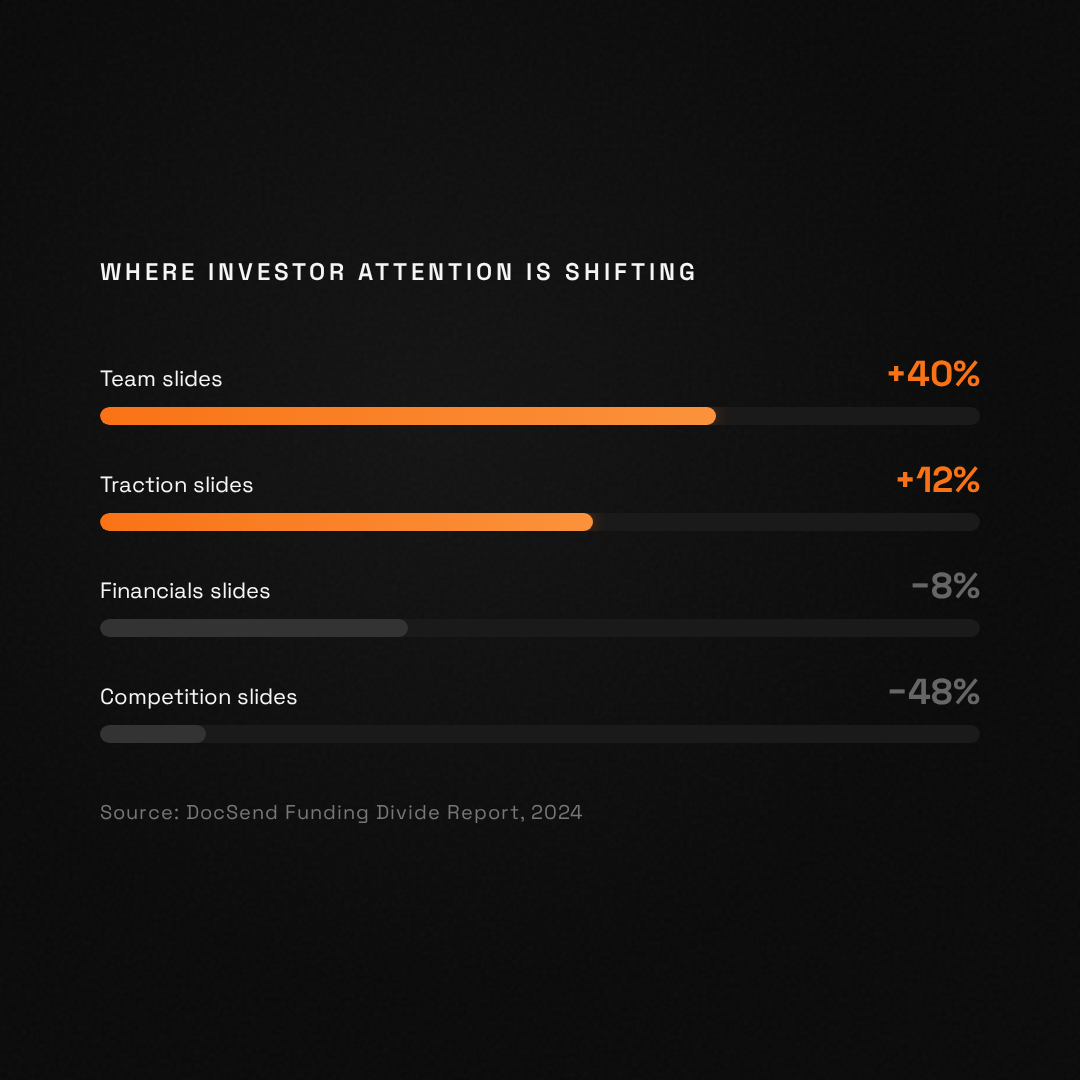
DocSend's 2024 data shows that investors spent 40% more time on Team slides in seed deals compared to the prior year, while spending 48% less time on Competition slides (DocSend Funding Divide Report, 2024). This shift reveals something important: investors are increasingly focused on the people, not the market thesis. A data room full of TAM slides and competitive matrices is optimized for the wrong thing.
Data rooms exist because investors need somewhere to confirm what they already suspect. A 2022 systematic review in the Venture Capital journal mapped the signals investors rely on in early-stage equity financing: team credentials, IP, early traction, accelerator graduation, and prior validation (Venture Capital Journal, Signaling Theory in Early-Stage Equity Financing, 2022). The data room is where each signal gets checked against something confirmable. A data room organized by signal category, with live sources attached, compresses that confirmation from hours to minutes.
Investors do not build conviction from spreadsheets. A VC with an engineering background and one with a natural science background will read the same data room and reach different conclusions, because they are applying different evaluation frameworks shaped by their training (Springer, Journal of Business Economics, 2021). A single static data room cannot adapt to those frameworks. Live answers, clearly organized by the questions each partner asks, can.
The Real Problem: Every Investor Starts from Zero
Here is where data rooms fundamentally break down. A single seed round typically involves many independent diligence loops across multiple funds, and each of those investors opens the data room fresh. They ask the same questions. They request the same clarifications. Nothing transfers between funds because the data room is a destination, not a shared workspace.
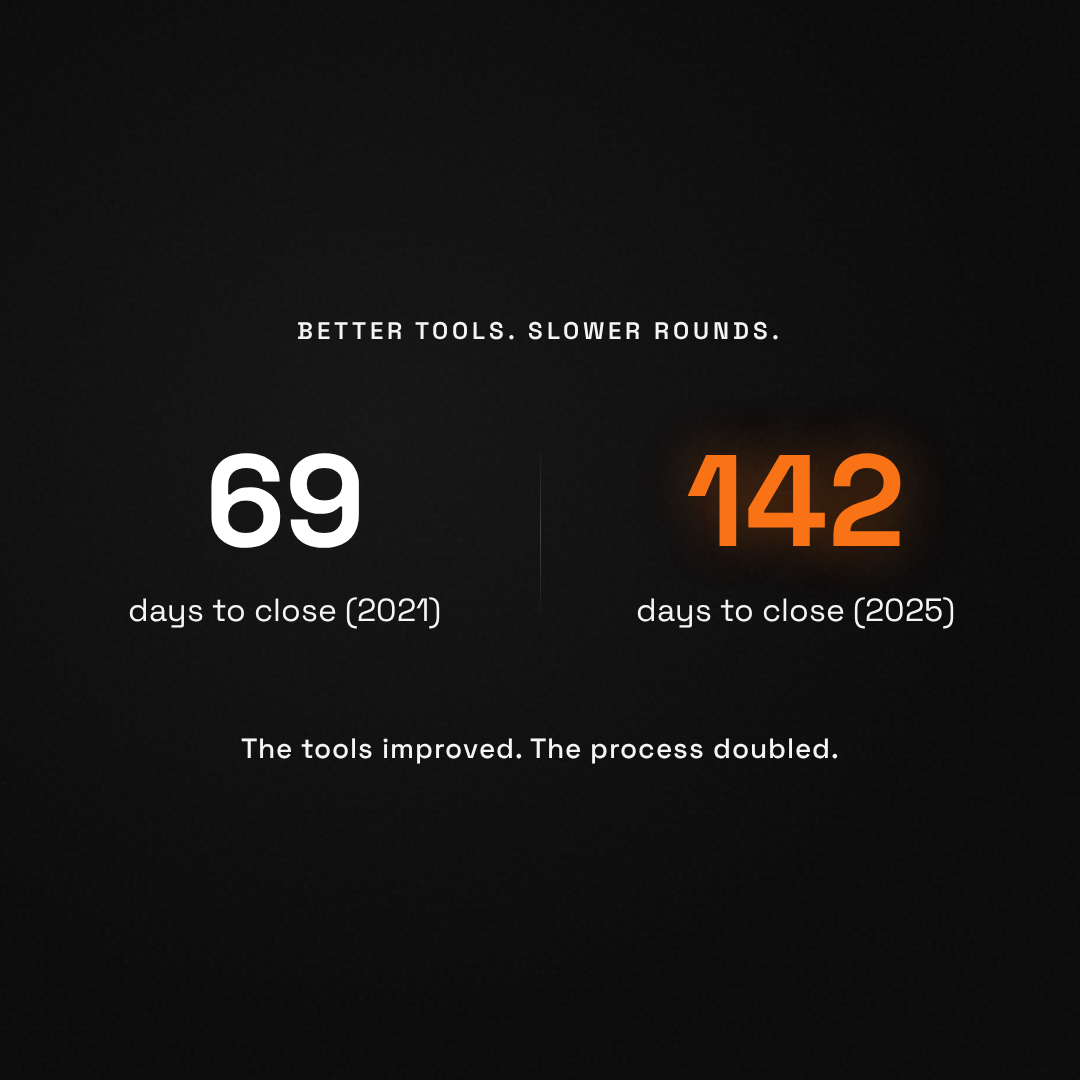
A data room cannot carry conviction from one investor to the next. It provides raw materials, but each fund reassembles them independently. The median seed round now takes 142 days to close (Carta State of Private Markets, 2025). For context, the same metric was 69 days in 2021. The process has doubled in length while the tools have gotten better. That disconnect should tell you something: the tools are solving the wrong problem.
Founders who spend six or more months fundraising repeat answers across 15 to 20 investor meetings on average (Crunchbase 2025). The repetition is not caused by a lack of documents. It is caused by a lack of structured proof that transfers between conversations.
What Does a Proof Layer Look Like?
The difference between a data room and a proof layer is simple. A data room is a collection of claims. A proof layer is a collection of real, confirmable answers.
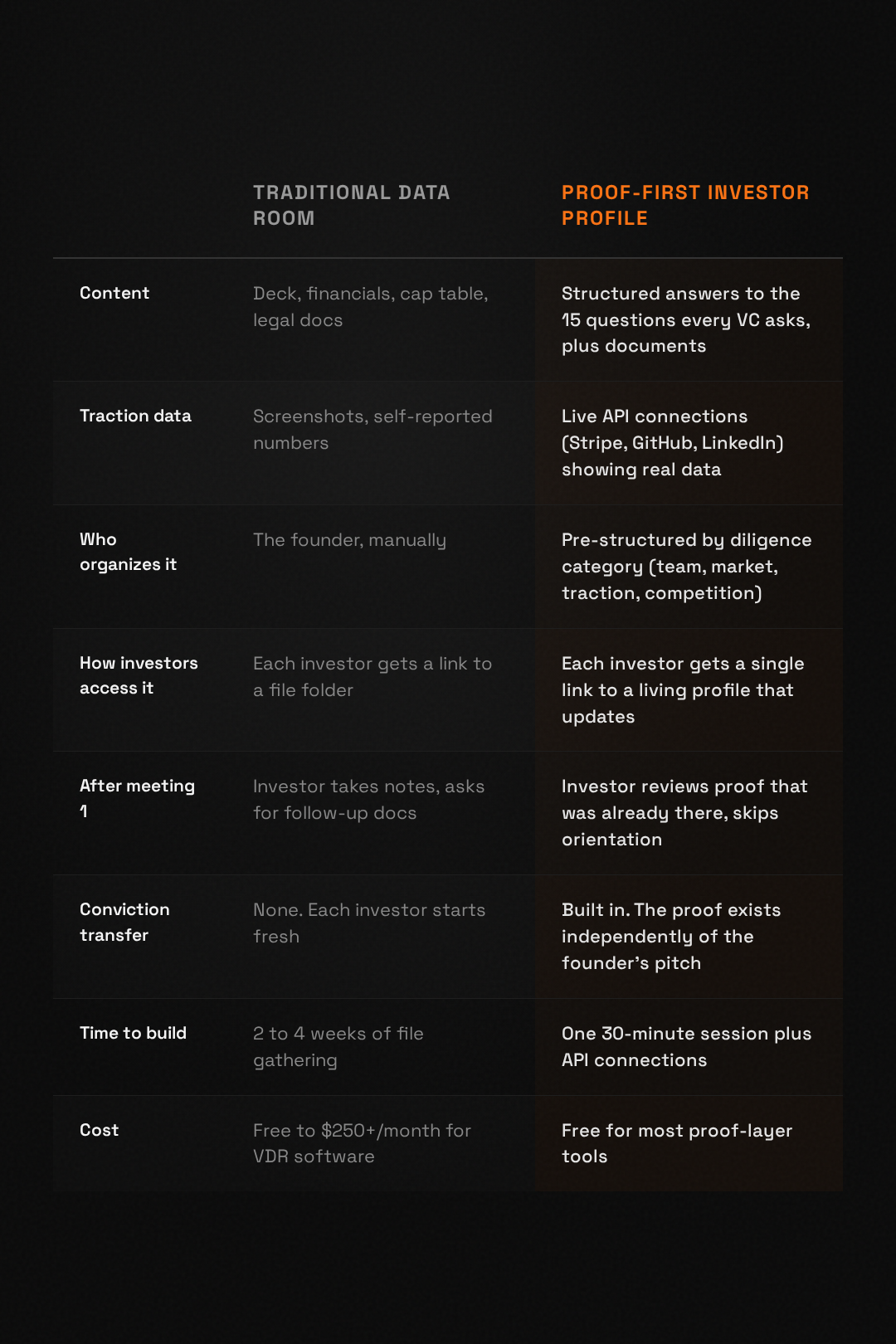
A proof layer outperforms a data room because it inverts the workflow. A data room waits for the investor to go find answers. A proof layer delivers the answers structured around the investor's mental model. The difference shows up in close rates. CB Insights reviewed 431 VC-backed company failures and found 43 percent cite poor product-market fit as the root cause (CB Insights, 2024). A data room cannot fix a weak thesis. What it can do is let investors see traction, team, and unit economics clearly enough to form conviction in one session instead of three.
The shift toward proof is accelerating on the investor side. Seed and early-stage funds are increasingly routing inbound deals through structured scoring before a human partner ever sees the deck. That workflow rewards founders whose materials are already machine-readable: API-connected traction, structured answers, tagged categories. A folder of PDFs cannot participate in that workflow. A proof layer can.
SeedForge: The Proof Layer That Did Not Exist Before
This is where SeedForge replaces the traditional data room. Instead of a folder of PDFs, a founder runs one 30-minute AI session that covers the diligence categories investors weight most: team, traction, market, and unit economics. Live data connections to Stripe, LinkedIn, and GitHub mean the numbers are confirmable, not self-reported. The output is a Living Profile accessed through one link. Investors treat it as the data room, but it carries conviction instead of requiring them to build it. The first session is free at seedforge.com.
What to Include in Your Investor Data Room (Proof-First Checklist)
Whether you use a traditional data room or a proof layer, here is what investors actually need. The difference is how you present it.
Team proof (the category investors weight heaviest): Your founding story, but structured. Why this team, why this problem, why now. Prior relevant experience with specifics. If you have co-founders, explain how you divide responsibilities. If you are a solo founder, explain how you compensate. Include LinkedIn profiles, not resumes.
Traction proof (live, not screenshots): Revenue numbers connected via API, not pasted into a slide. User growth with dates and sources. Cohort retention if you have it. Even pre-revenue startups can show waitlist signups, LOIs, or pilot commitments with dates attached. The goal: an investor should be able to see the data is real without asking you to prove it.
Market proof (bottoms-up, not top-down): Skip the $50 billion TAM slide. Show how you calculated your serviceable market from the bottom up. Name 10 potential customers. Show what they pay for alternatives. Investors spend 19% less time on Market Size slides than they did a year ago (DocSend 2024). They have seen enough top-down TAM slides to last a lifetime. Give them something specific.
Financial proof (assumptions, not projections): Partners rarely open the deep financial model on the first read. They want to stress-test the assumptions first. Do not spend three weeks building a 5-year model nobody will open. Instead, show your unit economics assumptions: CAC, LTV, payback period. If pre-revenue, show your burn rate and runway calculation. Make the assumptions explicit so investors can challenge them in the room.
Use of funds (specific, not vague): Break down exactly how the raise will be deployed. Hiring plan with roles and timelines. Product milestones tied to spend. The number one question investors ask after "how much are you raising" is "how will you spend it." Have the answer ready in writing, not just in your head.
Legal and cap table (standard, but necessary): Articles of incorporation, any existing SAFEs or notes, cap table. SAFEs comprised 90% of pre-seed deals in Q1 2025 (Carta 2025). Have your instrument terms documented clearly.
Frequently Asked Questions
What is the best free data room for startups raising a seed round?
For file storage and sharing, Papermark and Google Drive work. For analytics, DocSend and Peony offer freemium tiers. But if the goal is building investor conviction, a proof-first Living Profile that includes structured diligence answers alongside documents outperforms any file folder. The cheapest option is often the most expensive in wasted meetings.
What should I include in my startup data room for investors?
Include team background with specifics, traction data that can be independently confirmed, bottoms-up market sizing, unit economics assumptions, use of funds breakdown, and standard legal documents. The most overlooked item: pre-written answers to the fifteen questions every seed investor asks about team, market, traction, and competition. Having these structured saves 3 to 5 meetings worth of repetition per investor.
How is a Living Profile different from a virtual data room?
A virtual data room is a secure folder for sharing documents. A Living Profile is a structured proof layer: it includes the documents, but also real traction data pulled live via API, pre-structured answers to investor diligence questions, and a format designed for how investors actually consume information. The key difference is that a Living Profile transfers conviction between investors without the founder re-explaining the basics each time.
Do investors actually use data rooms at seed stage?
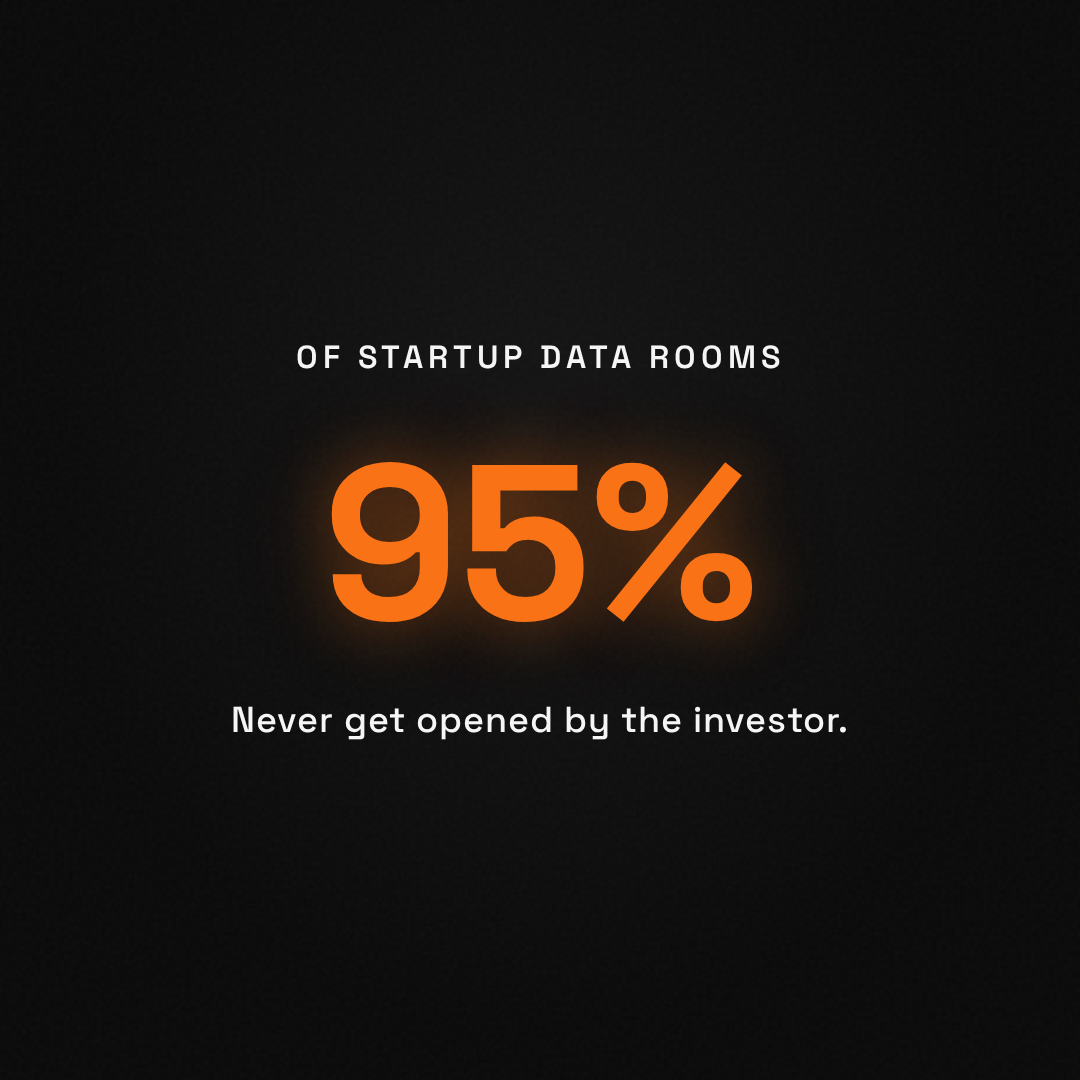
Most do not in the traditional sense. A study of 21,000 VC deals found that 95% had zero detected in-person due diligence (Fu and Taylor, NBER Working Paper 33987, 2025). At seed stage, investors decide based on the pitch, the conversation, and whatever structured information the founder provides. A data room that requires digging through files rarely gets used. Structured proof does.
How long does it take to set up a data room for fundraising?
A traditional data room takes 2 to 4 weeks to assemble: gathering documents, organizing folders, setting permissions. A proof-first approach takes less time because it starts with the questions investors ask, not the files you have. One 30-minute session covering team, market, traction, and competition, plus connecting live data sources, produces a shareable profile faster than assembling a document library.
Should I use a free data room or pay for one?
The VDR market offers options from $0 to $250+ per month. For most seed-stage startups, a paid data room is unnecessary. The bottleneck is not file security or access control. It is whether the information inside builds investor conviction. A free tool with strong analytics (so you can see who opened what) combined with structured proof of your startup's fundamentals will outperform an expensive data room full of unread documents.